
Japan Is Ready to Fight a $385 Billion Annual Polluting Beast by Offering a Greener Alternative to Traditional Cement
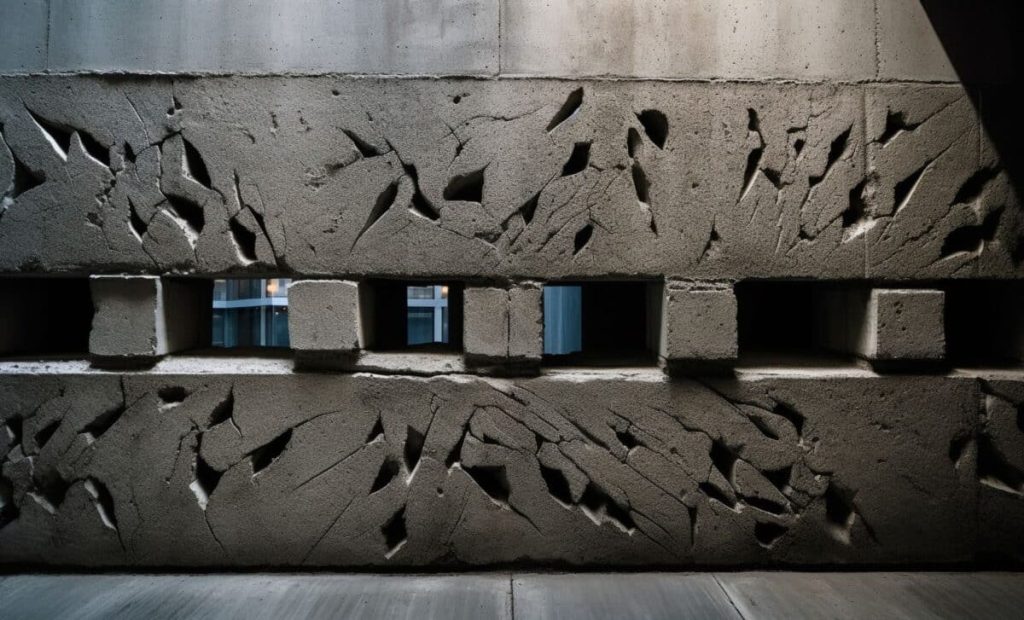
Japanese researchers have quietly developed a groundbreaking material that completely eliminates the need for traditional cement—and it’s made from materials most construction sites typically discard. Early testing shows that it performs well where it counts.
On the outskirts of Osaka, a team of civil engineers has created a new soil binder from recycled construction dust and crushed glass. This cement-free blend has the potential to transform one of the world’s most polluting industries. Developed in a university lab filled with bins of discarded debris, the binder significantly reduces carbon emissions in construction.
According to Science Daily, the material, developed under the leadership of Professor Shinya Inazumi, not only meets industry standards for soil stabilization but also addresses two major environmental challenges: industrial waste and CO₂ emissions. “By using two industrial waste products, we developed a soil solidifier that not only meets industry standards but also helps address the dual challenges of construction waste and carbon emissions,” said Inazumi.
Challenging the Cement Standard
Ordinary Portland Cement, the most common material used in concrete and soil stabilization, accounts for roughly 7 to 8 percent of global CO₂ emissions, according to the Intergovernmental Panel on Climate Change. Its production process is energy-intensive, requiring extremely high temperatures and emitting vast amounts of greenhouse gases.
The Japanese team’s binder bypasses this entirely. By heating a mixture of recycled construction dust and powdered glass at relatively low temperatures—between 110 and 200 degrees Celsius—they created a geopolymer capable of stabilizing weak soils. Earth Silica is added for extra strength, resulting in a final product that achieves compressive strength levels of over 160 kilonewtons per square meter. That makes it suitable for use beneath roads, buildings, and bridges.
Inazumi also addressed concerns about environmental safety. Early formulations posed a risk of arsenic leaching from the raw materials, but the issue was resolved by incorporating calcium hydroxide. “Sustainability cannot come at the expense of environmental safety,” he emphasized. “We demonstrated that incorporating calcium hydroxide effectively mitigated this issue.”
Built for Fragile Soils and Emergency Use
One of the binder’s most important advantages is its versatility. It sets quickly, making it ideal for emergency construction or disaster response. It’s also highly resistant to chemical degradation—including damage from sulfates, chlorides, and freeze-thaw cycles—making it well-suited for cold climates and unstable soils.
In many areas of Japan where clay-rich soils complicate infrastructure development, this new binder offers a lower-cost, lower-emission alternative. The researchers also note that the material can be molded into compressed blocks, similar to traditional bricks, for use in rural construction projects—without the carbon footprint of kiln-fired bricks.
A Market Ready for Innovation
Globally, the cement industry is one of the largest and most polluting sectors. Cement production reached 4.39 billion metric tons in 2024, with China alone accounting for nearly half. The industry was valued at approximately €385 billion and is projected to grow by more than 4 percent annually through 2032.
This presents a massive opportunity for change. While the Osaka binder isn’t designed to fully replace cement, it offers a strong, sustainable alternative—especially where environmental restrictions or budget concerns make traditional materials unfeasible. Its blend of strength, speed, and eco-friendliness opens up new possibilities for sustainable infrastructure.
Rethinking Waste as a Resource
Professor Inazumi believes the implications go far beyond construction. “By developing a geopolymer solidifier from readily available waste streams, we are not only offering a sustainable engineering solution but redefining how we value industrial byproducts in a resource-constrained world.”
Their research, published in Cleaner Engineering and Technology, is already gaining interest from engineers and urban planners focused on reducing the environmental impact of construction. For the team in Osaka, this is just the beginning of a broader shift in materials science—where waste isn’t thrown away, but transformed into opportunity.
Source :
The Daily Galaxy –Great Discoveries Channel
-
loopicaco
- No Comments